


“A sandwich? You mean packaged bread and processed cheese? Karanika, are you sure?”
Yes. Absolutely.
This is a conversation I have with clients all the time, often with even more drama from worried parents. Somewhere along the way, words like “packaged” and “processed” began getting automatically labelled as unhealthy, while products carrying loud claims like high protein, fortified, multigrain, or rich in vitamins started being accepted as healthy without much questioning. But food is rarely that black and white.
So let’s decode this once and for all.
When it comes to food choices, it helps to step back and look at food through one simple but powerful lens: how much processing it undergoes before it reaches your plate.
Today, the NOVA classification of foods is widely used. For the first time, and much needed at that, nutrition science began emphasising that the concern is not merely individual nutrients, but the level and purpose of processing itself. This framework groups foods into four categories based on the type and extent of processing they undergo:
i) Natural and Minimally Processed Foods
ii) Oils, Fats, Sugar and Salt
iii) Processed Foods
iv) Ultra Processed Foods
The degree of processing influences far more than just nutrient content. It shapes taste, texture, satiety, portion sizes, eating patterns, and how often a food becomes part of daily life. Beyond health, it also impacts farming practices, local food systems, and environmental sustainability, though that deserves a separate conversation of its own.
By the end of this blog, you will understand not just what to include more often and what to limit, but why these choices matter. They influence your child’s appetite regulation, long term eating habits, relationship with food, and overall health. At the same time, they shape the larger food ecosystem that determines what eventually reaches our kitchens. Because with every added layer of processing, packaging, and transport often comes a greater environmental footprint.
Natural and Minimally Processed Foods
Natural foods are those obtained directly from plants or animals and eaten without major alteration after being removed from nature. These include whole grains, pulses, vegetables, fruits, nuts, seeds, milk, eggs, meat, and fish. For growing children, these foods form the foundation of nourishment because they provide nutrients in their most complete and balanced form.
Very close to these are minimally processed foods. These are foods that have been slightly altered to improve safety, storage, or ease of cooking without changing their core nutritional value. In most Indian homes, this is what we cook with every day. Rice and dals are cleaned and packed. Wheat is ground into flour. Milk is pasteurised. Vegetables are washed and trimmed. Meat and fish are cleaned and chilled. Milk is set into curd.
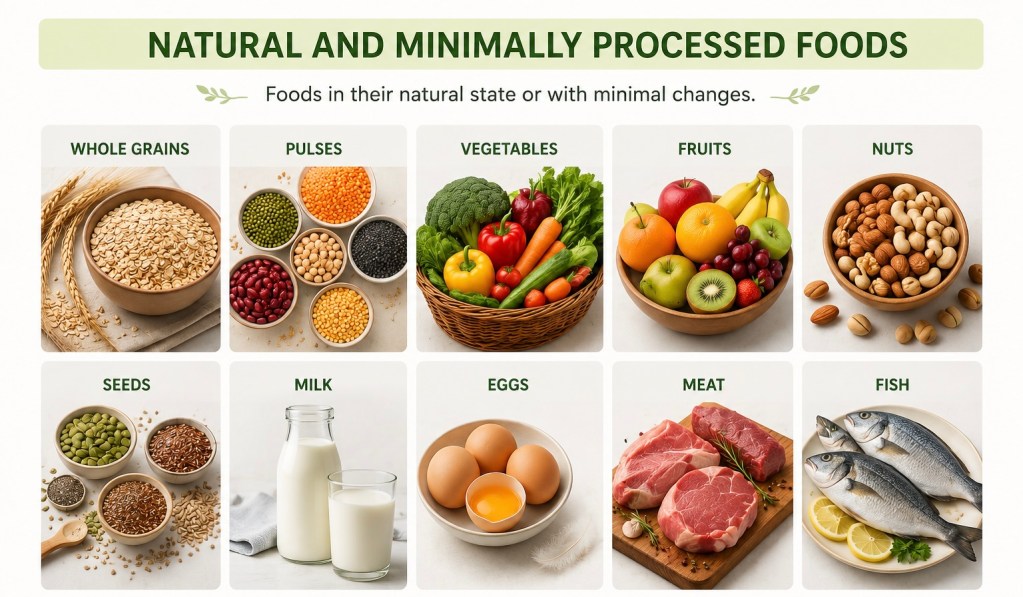
Processes such as cleaning, drying, grinding, refrigerating, freezing, pasteurising, and fermenting are all forms of minimal processing. They have existed in traditional food systems for centuries. These methods prevent spoilage, improve safety, and often enhance digestibility.
Today, many parents feel anxious because conversations around food purity can become fear driven. Marketing and social media sometimes create the impression that only organic, imported, or premium labelled foods are safe. For most families, this is neither practical nor necessary. Natural and minimally processed foods purchased from a trusted local vendor, neighbourhood grocer, or reliable brand within your budget are absolutely appropriate for daily nutrition.
India has established food safety regulations monitored by bodies such as the Food Safety and Standards Authority of India. While no food system in the world is completely risk free, routine foods available through regular supply chains remain safe for everyday use. For maximum benefit, prioritise foods that are locally grown and eaten seasonally. Seasonal produce is fresher, more affordable, and often more nutrient dense. It also helps children develop familiarity with regional ingredients and traditional meals. As parents, reconnecting with local produce and seasonal cooking may be one of the simplest and most powerful ways to protect your child’s health while carrying forward the food wisdom that has sustained generations before us.
Oils, Fats, Sugar and Salt
Across cultures and throughout history, diets have always included natural foods along with culinary ingredients such as oils, fats, sugar and salt. These are typically used in preparation rather than eaten on their own. Examples include cold-pressed oils, butter, ghee, sugar, jaggery and different types of salts.
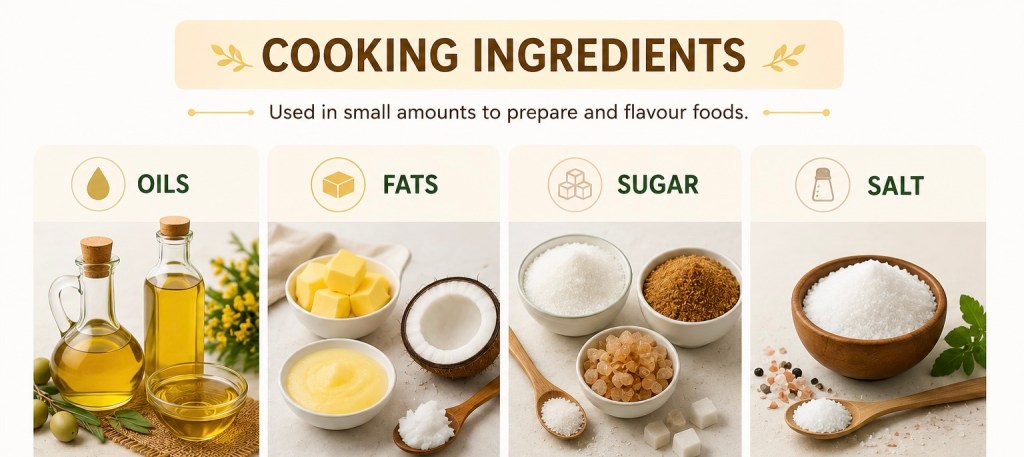
When used in appropriate quantities, these ingredients play an important role. They are used in home and restaurant kitchens to cook and season foods into nourishing and satisfying meals. They enhance taste, improve texture and support nutrient absorption. For example, fat-soluble vitamins such as A, D, E and K are better absorbed in the presence of dietary fats like oils and ghee. Sugar and salt are important electrolytes involved in homeostasis, fluid balance, and nerve transmission. In children, maintaining this balance is essential for growth, brain development, muscle function, and overall physiological stability.
Brazilian food scientist Carlos Monteiro and his research team, while studying the rise of obesity in Brazil, came across an interesting observation: households that stocked greater amounts of culinary ingredients such as sugar, salt and butter were often healthier than others. This challenges the narrative that single nutrients are solely responsible for modern health problems. Instead, it forces us to look beyond individual ingredients. In practical terms, the presence of salt, sugar and butter often indicates that a household is cooking more at home and relying less on ultra-processed foods.
Processed Foods
Processed foods are foods that have been altered from their natural or minimally processed form, usually by adding salt, sugar, oil, vinegar or similar culinary ingredients. There is a lot of fear around this addition of salt, sugar and oil. But as we have already understood, these ingredients are not to be feared. They are to be used judiciously.
The intention behind this kind of processing has traditionally been to improve shelf life, enhance taste and make food easier to store and prepare. These techniques are not new. They carry strong cultural roots and have been part of meal patterns across India and globally for centuries.
Cooking, drying, fermentation, pickling, curing, smoking, canning and bottling are traditional culinary methods. Most processed foods are still easily recognisable as the original food they are derived from. Examples are –
- Pickles, sun-matured with oil and spices or preserved in salt or brine
- Fruits preserved in sugar, like murabbas
- Sun-dried papads
- Fermented batters for idli and dosa
- Cheese or paneer made from milk
- Bread made from flour, yeast, water, and salt
- Salted or cured meats
- Fish preserved in oil or salt
Processing, in itself, is not the problem. Curd and cheese are processed milk. Bread is processed grain. Pickles are preserved vegetables. These are age old techniques of fermentation, culturing and preservation that existed long before factories did. The primary role of processing in these foods has been preservation and flavour development. It is also a good way to store seasonal produce and ensure availability across the year.

It’s important to note that each of these foods also have their ultra-processed versions. Mass-produced pickles under large-scale brands, or frozen meats like salami and sausages, are examples. These are to be avoided. There can even be overlap with minimally processed foods, like with papads, curd or paneer. These are good and should be a part of your child’s diet regularly.
Unfortunately, many of these foods are often lumped together with packaged junk food. This misinformed messaging creates unnecessary fear and distracts from the true value of these foods. Each one is a treasure trove of nutrition, taste, and centuries of knowledge and cultural heritage, passed down through written scriptures and oral traditions — not just in India, but across cultures around the world. Much of the fear has been amplified on social media, but it is not entirely accurate.
These foods are not only safe but essential as part of children’s diet. They provide protein, calcium, beneficial bacteria, energy, and taste diversity. They are practical and nutritionally valuable foods to keep at home. For parents, the key is to recognise that processed foods are not inherently unhealthy.
Ultra Processed Foods
Ultra processed foods are industrial formulations created using multiple stages of processing and a long list of ingredients. These often include substances used only in industrial food production such as emulsifiers, stabilisers, flavour enhancers, artificial colours, preservatives, and synthetic additives.
Because of their ingredients and method of production, ultra processed foods are nutritionally unbalanced. They are designed to be extremely palatable and convenient, which encourages overconsumption. The manufacturing of ultra processed foods is usually dominated by large food industries where profit margins take priority over population health. While these products contain ingredients that originate from natural foods, they are present in very small quantities and are heavily altered nutritionally. Many products are marketed based on the goodness of these natural ingredients, even though most of their original benefits are lost during processing. This makes such claims misleading for consumers.
Ultra processed foods include confectionery, sugar sweetened beverages, artificially sweetened drinks, powdered juice mixes, processed meats such as sausages and nuggets, ready to eat frozen meals, cake mixes, instant soups, instant noodles, packaged seasoning mixes, sauces and condiments, jams, breakfast cereals, cereal bars, energy drinks, and an endless range of packaged snack foods.
These foods commonly contain excessive fat, sugar, or both, while lacking dietary fibre and protective nutrients. Their poor nutritional composition increases the risk of childhood obesity, diabetes, heart disease, hormonal disturbances, and other non communicable diseases. It is important for parents to understand that the rising burden of these conditions is driven far more by ultra processed foods than by traditional kitchen ingredients like salt, sugar, ghee, or oils used in home cooking.

With this we can conclude that home cooked meals, fresh as much as possible, using the foods from the natural, minimally processed and processed categories using ghee, oil, salt and sugar are the best for children. Anything outside of this should pass scrutiny.
One category that especially deserves scrutiny is “health tagged” packaged foods. These products are often marketed with claims like high protein, rich in calcium, fortified with vitamin D, or loaded with antioxidants. A nutrition bar may highlight protein, a chocolate drink may advertise vitamins, and biscuits may claim added calcium. But despite these selective nutrient claims, all of these products still fall into the ultra processed category. This is where food marketing becomes misleading. By spotlighting one or two nutrients, products create a health halo that distracts from the overall quality of the food itself.
In today’s world of social media and influencer marketing, ads can be camouflaged as personal journeys and genuine recommendations, and you really have no way to find out the transactions behind them.
Which is why the NOVA classification becomes such a powerful tool. It helps us move beyond the simplistic idea that all “processed” food is unhealthy, and instead understand that the degree and purpose of processing matter. The focus shifts away from clever packaging and nutrient claims, and back to what the food actually is, how it was made, and how far it has moved from its original form.