


You will find the tone of this article conversational, this is because it has been adapted from my ‘Pecha Kucha’ presentation. This was for the Leap Club members where I delved into a topic that’s essential, for our personal well-being and the future of our planet: Sustainable Eating.
UN’s Sustainable Development Goals
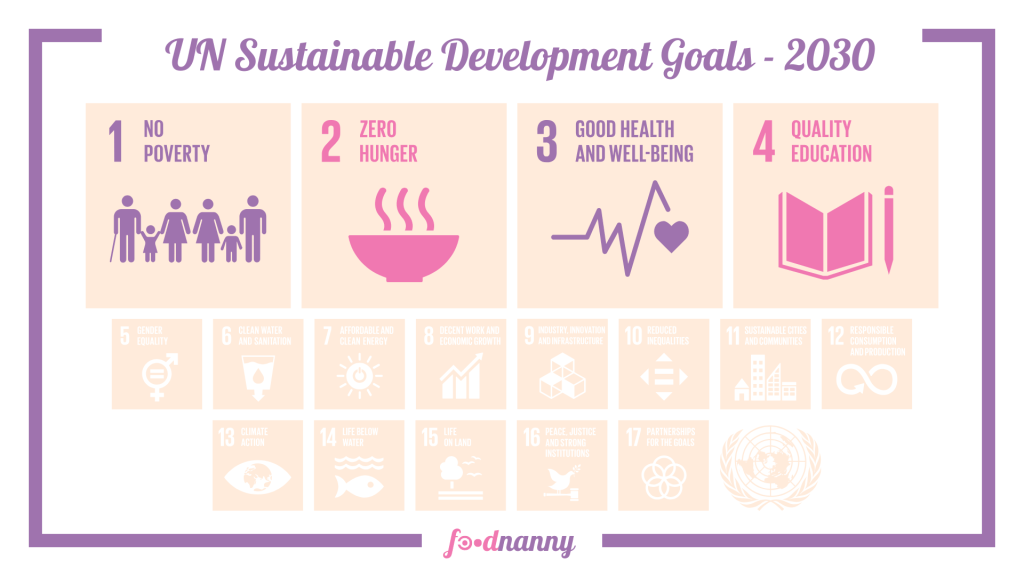
You are familiar with the United Nations’ 17 Sustainable Development Goals (SDGs) that we aim to achieve by 2030. Four of these are particularly relevant to sustainable eating. These are : No Poverty, Zero Hunger, Good Health and Well-being, and Quality Education. Good nutrition and education are essential for achieving these goals, and they’re deeply interconnected. Proper nutrition fuels our bodies and minds, while quality education empowers us to make informed food choices.
Today, we are a population with the highest literacy rate India has ever seen. It has steadily increased over the decades, from just 18% in 1951 to over 50% in 1991, and now to around 80%. With advancements in technology, increased social awareness, and policy changes, we are also more empowered today than in previous decades. Notably, efforts toward women’s empowerment have played a crucial role in this progress. A win !
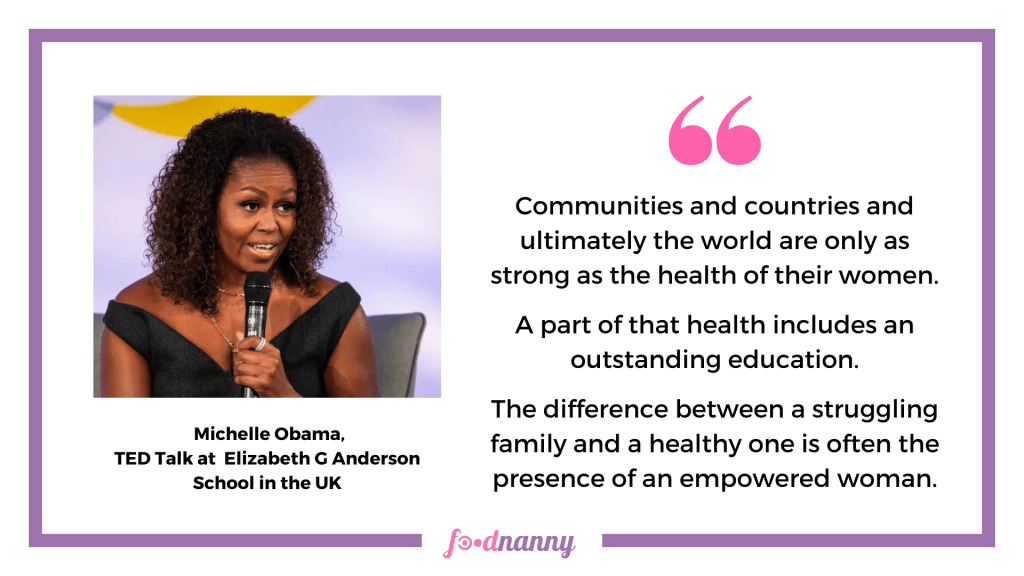
With this, we have the potential to unlearn and relearn how to make the right food choices for ourselves, our families, and our planet. And we do know this, don’t we?
Well, the first step to unlearning or educating ourselves is identifying the concern and rectifying it. So, what is really coming in the way of making the right food choices ?
-
Not getting the right knowledge in schools and colleges
-
Not eating the right foods at home
-
Not getting the right advice from health professionals
-
Not being able to identify the fads and trends in media
Unfortunately, it is all of the above that leads to food confusion – We don’t know what to eat. We don’t know what is good for us.
Top 3 contributors of food confusion
1. Nutrition Transition
It is a term coined by food scientist Barry Popkin in 1993. Nutrition Transition is a phenomenon that we have been observing for the last 3 to 4 decades, especially in developing economies like ours, India.
We see a shift in the eating pattern where we are moving from our regional foods and age-old food wisdom to adopting Western dietary patterns. This more often than not reaches us as ultra-processed and packaged foods. From diversity, we are moving towards uniformity.

For example, we have almost forgotten the grains and millets of our regions like rajgeera (amaranth) in West, kuttu (buckwheat) from North, kutki (little millet) from East and kodo from South. These are local to India and we have been eating these for generations. These are easily accessible and affordable, with innumerable recipes, documented or not.
But today, countrywide, we see an increasing inclination towards buying rolled oats and looking for ‘healthy recipes’ for quinoa on Google. Mango and banana are labelled all things bad and avocado becomes the new fad !
2. Media Influence
Media today is more powerful than ever. It is a boon for our generation but can also be a bane. Today information is available to us at a click. But who is to differentiate information from misinformation ? Myths from facts ? The influence of media is the 2nd most significant contributor to food confusion.
Media plays a powerful role in shaping our perception of food. The rapid spread of diet fads and trends can be confusing and detrimental to our mental well-being and physical health.
The common narrative through the years is to demonize one nutrient and label it ‘bad’ while glorifying another as a ‘hero’. What is confusing is that these keep changing. Yesterday’s villain becomes today’s hero.
Remember, only a decade (or two) ago ghee was the biggest evil on our plate. The rich and poor, alike, stopped using it in parathas and rotis, in homemade sweets and everywhere else. And today ? Ghee is the ‘hero’. Having a spoonful on waking up with water seems to combat all health concerns. Adding it to (bullet) coffee is a great ergogenic beverage !
UFF. It is high time we saw beyond these gimmicks. Use ghee as we have been, in curries, rice, parantha and for frying or roasting. Another example is sugar and you can read all about it – here.
3. Nutritionism
For fads to thrive and reap profits for the industry (food, pharma, health), it is essential that we look at food through the lens of nutrients – like carbohydrates, protein, fats, antioxidants, omegas etc. This is called nutritionism, which is the third most common contributor to food confusion. Like all other “isms” like racism, sexism, ageism, this too is equally discriminatory and harmful.
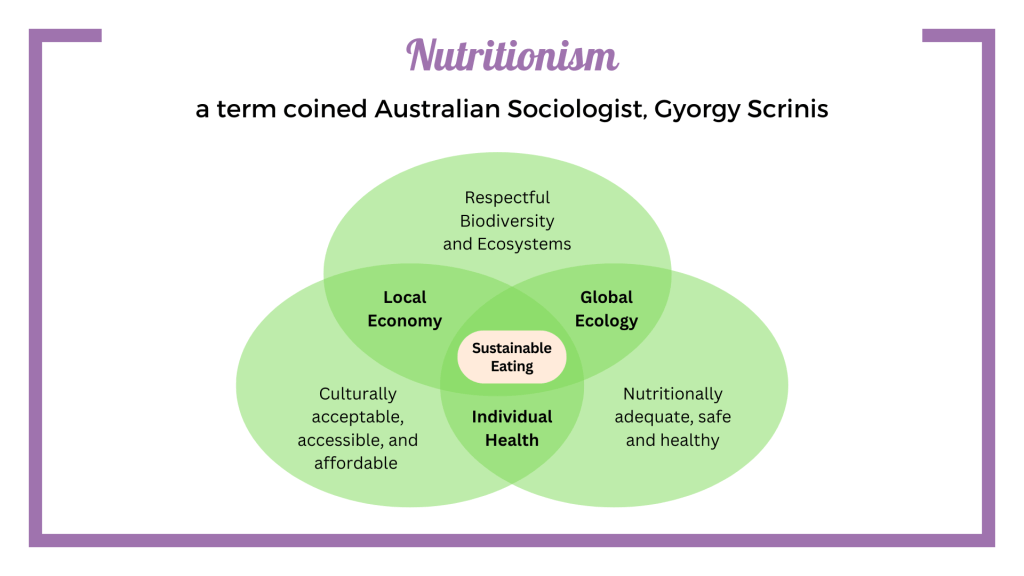
Nutritionism, a term coined by Australian Sociologist, Gyorgy Scrinis, is the focus on individual nutrients rather than whole foods. It neglects our food system and doesn’t account for agricultural practices, gov. subsidies and policies, cultural significance, local cuisine, festivals and our strong food heritage. There is no scope for celebratory meals, festivities, or cultural food practices. There are only good nutrients and bad nutrients.
The Way ahead…
Now that we’ve identified the problem, I’d like to share two simple tips that we can learn today and implement moving forward on our journey toward sustainable eating.
1. The Grandmom Test
The first is the grandmom test. This is by Michael Pollan and proves to be a good sustainability test. For a food to pass this test –
- Your grandmother must know it
- Your family should identify it in more than one language
- You should be able to use it in multiple ways in cooking
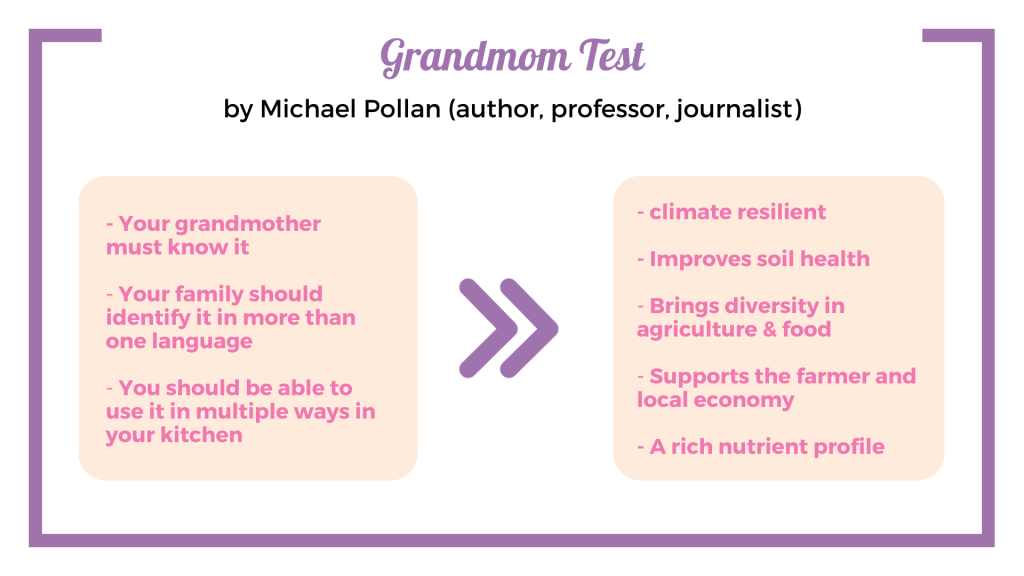
Any food that passes this test is sure to contribute to the crop cycle of the region and ensure nutrient replenishment to the soil of the area it grows in. This food reaches us fresh, covering fewer food miles with a reduced carbon footprint. It is climatically acclimated and has a richer vitamin and minerals profile. So, mango and mulberries in India, Avocado and quinoa in South America.
2. No Packaged Foods
The second suggestion is to avoid all packaged food. Do know that longer the shelf life, lower is the nutritional content and higher the carbon footprint. Moreover, labels boasting “low sugar,” “high protein,” or “antioxidant-rich” are not always reliable; these are more of a marketing gimmick than an indicator of health. If you notice, the nutritional content of packaged foods often changes with food trends, making them less trustworthy (thanks to nutritionism !)
For The Planet
In addition to the dietary changes, consider adopting zero-waste and green living practices in your kitchen. These practices help reduce your carbon footprint and contribute to a more sustainable planet. Check Here.
Note : Thank you for joining me in this exploration of sustainable eating. Let’s make informed choices that benefit both our health and our planet ! You can also follow us on instagram (@foodnanny.dr) for more tips on sustainable eating and unbiased healthy meal planning practices.